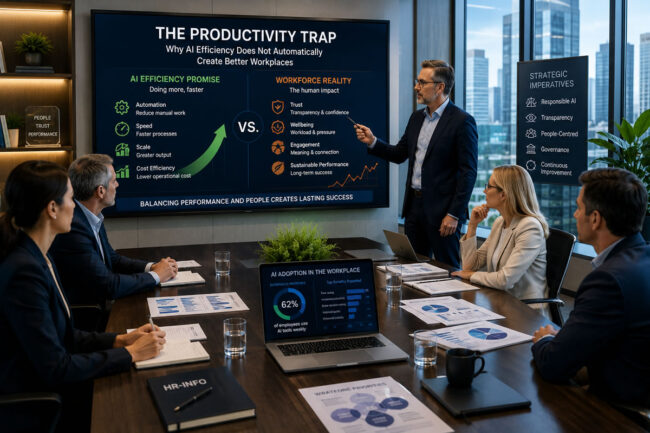

The Productivity Trap: Why AI Efficiency Does Not Automatically Create Better Workplaces

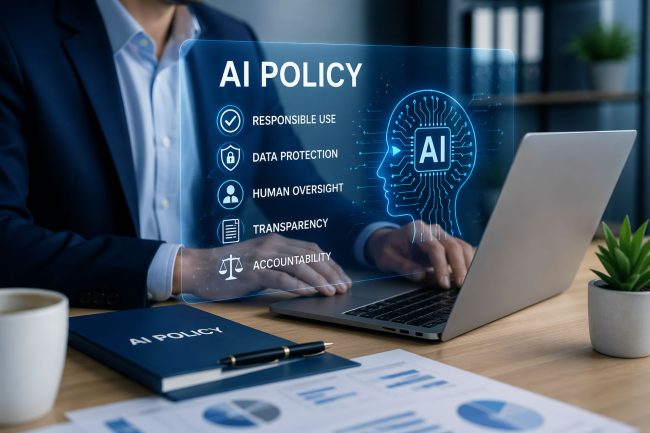
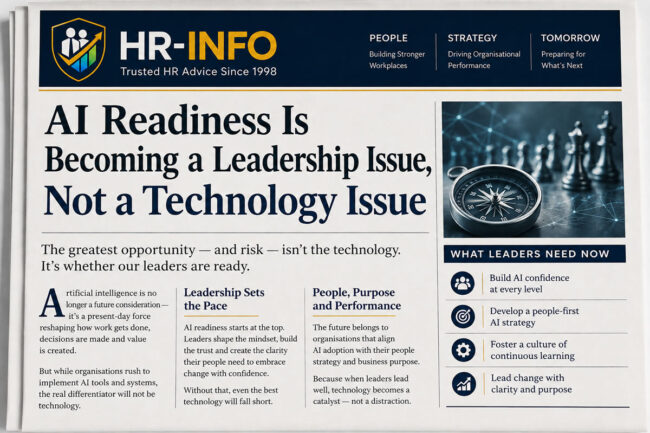
Artificial intelligence is increasingly being introduced into workplaces with the expectation that greater efficiency will naturally lead to stronger organisational outcomes. Businesses continue investing heavily in AI-powered systems designed to automate repetitive work, accelerate decision-making processes, and improve productivity across multiple functions. On the surface, the assumption appears logical. If tasks can be completed faster,…

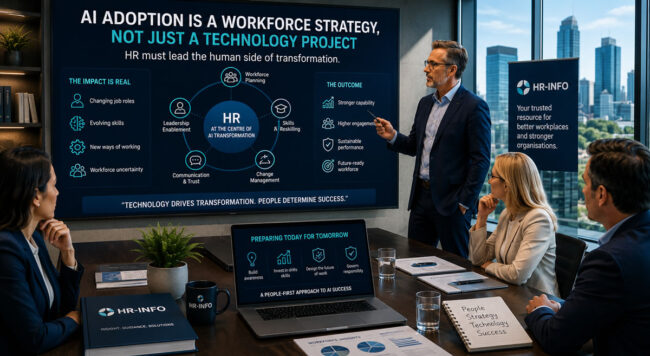
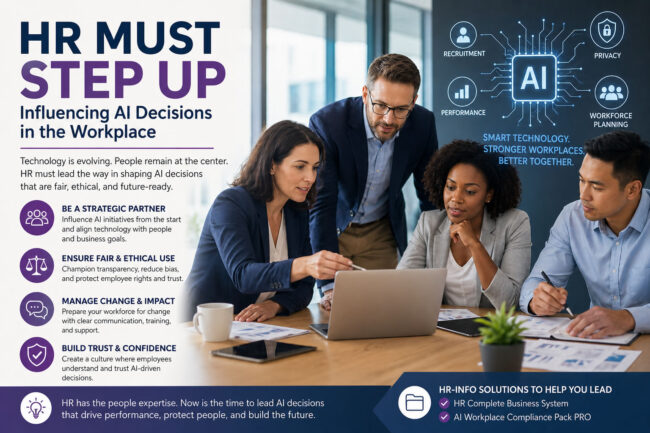
Why HR Must Become a Strategic Voice in Workplace AI Decisions

The adoption of artificial intelligence within Australian workplaces is no longer a future consideration. It is becoming an operational reality across multiple industries and organisational functions. AI-powered systems are increasingly influencing recruitment practices, performance management, workforce analytics, employee communications, productivity measurement, and business decision-making processes. For many organisations, discussions surrounding AI implementation have largely been…

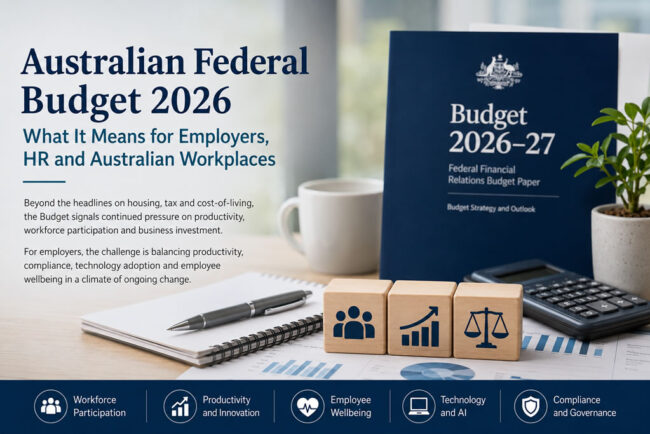
Australian Federal Budget 2026: What It Means for Employers, HR and Australian Workplaces

The Federal Budget delivered this week has been framed largely around housing affordability, cost-of-living pressures, productivity, healthcare spending, and long-term economic resilience. Yet beneath the political debate and headline announcements lies another important reality: many of the Budget’s long-term consequences will ultimately be felt inside Australian workplaces. For employers and HR professionals, the Budget reinforces…