


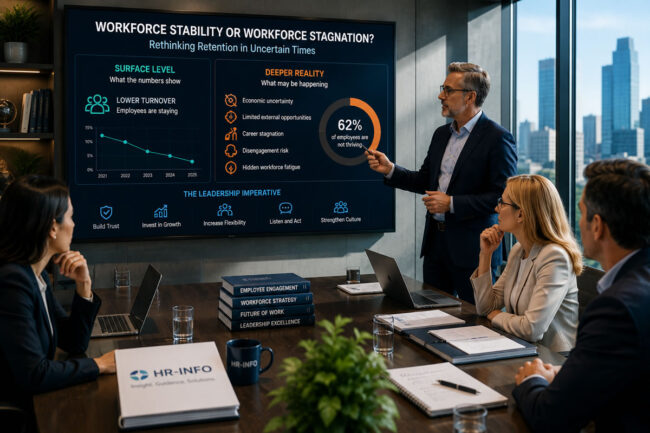
Workforce Stability or Workforce Stagnation? Reassessing Employee Retention in Uncertain Economic Conditions

For many organisations, lower employee turnover is traditionally viewed as a positive indicator of organisational stability, workforce satisfaction, and effective leadership. During periods of economic uncertainty, businesses often interpret stable retention figures as evidence that employees remain committed and engaged despite broader market pressures. However, the current workplace environment may require a more cautious interpretation.…


Circles of Influence: Why Great Managers Invite Feedback Upward

Adapted and expanded from the original article by David A. Bratton. For decades, organisations have focused heavily on downward feedback — managers evaluating employees, identifying weaknesses, measuring productivity, and monitoring performance. But one of the biggest blind spots in leadership is often ignored: Who evaluates the manager? It is a question many workplaces still struggle…

In Challenging Times, Service Matters More Than Ever

Inspired by original ideas from Ron Kaufman Economic pressure changes customer behaviour. When conditions tighten, organisations often look inward—cutting costs, streamlining operations, and in many cases, reducing investment in customer service. On the surface, this may appear logical. In reality, it is often the exact opposite of what is required. Because in difficult times, service…

How to Fall Back in Love with Your Job

Inspired by original ideas from Patricia Fripp The Familiar Pattern Most Professionals Experience Think back to when you first started your job. There was energy. Optimism. A genuine sense that this role could open doors, grow your skills, and move your career forward. Much like the early stages of a relationship, everything felt new—and full…