
Influence is one of the most valuable workplace skills.
Whether you are leading a team, managing stakeholders, negotiating with suppliers or trying to gain support for a new idea, your ability to influence others often determines the result.
Many people assume influence is something you either naturally have or do not have.
That is outdated thinking.
Influence is a practical skill that can be developed — and often improved quickly once you understand when to use the right approach.
In most situations, successful influence comes down to recognising one key question:
Are you dealing with facts or feelings?
Why Influence Matters at Work
Strong influence skills can help you:
- gain support for new ideas
- improve team performance
- handle difficult conversations better
- negotiate more effectively
- strengthen relationships
- improve leadership presence
- reduce resistance to change
Leaders who influence well often achieve more with less friction.
Step One: Identify the Situation
Before trying to persuade someone, ask:
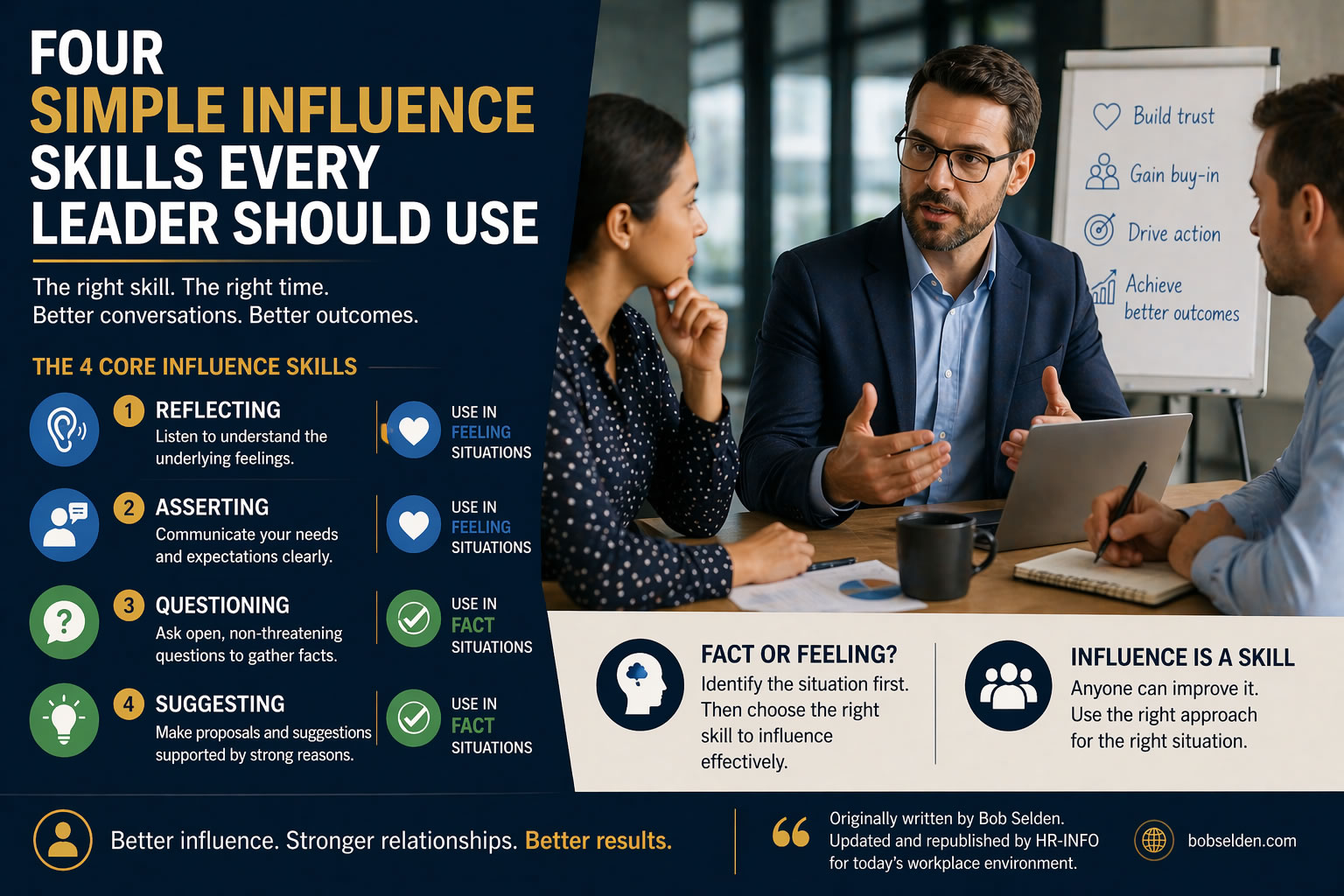
Is this a fact-based issue or a feeling-based issue?
Fact Situations Include:
- budgets
- proposals
- processes
- timelines
- purchasing decisions
- operational improvements
Feeling Situations Include:
- frustration
- resistance
- fear of change
- motivation problems
- conflict
- personal concerns
This distinction matters because different situations require different skills.
The Four Core Influence Skills
1. Reflecting
Used in feeling situations where the other person needs to feel heard.
Reflecting means listening carefully to the underlying concern, not just the spoken words.
Example:
“I can hear that you’re frustrated about how this was handled.”
This often reduces defensiveness and opens better discussion.
2. Asserting
Used in feeling situations where you need to communicate your own expectations clearly.
Asserting is not aggression.
It is calm, clear communication about standards, needs or boundaries.
Example:
“I need this completed by Friday, and I need confidence it will be accurate.”
Strong leaders are often respectfully assertive.
3. Questioning
Used in fact situations.
Ask open, non-threatening questions to gather useful information.
Examples:
- What led to this recommendation?
- What risks should we consider?
- What alternatives were reviewed?
Good questions often create better decisions.
4. Suggesting
Used in fact situations when presenting ideas or recommendations.
Strong suggestions are usually supported by logic.
Example:
“I recommend Option B because it reduces cost, improves efficiency and can be implemented quickly.”
Reasoned proposals carry more weight than unsupported opinions.
Common Workplace Mistake
Many people use the wrong style.
Examples:
Using Logic in an Emotional Situation
Trying to reason with someone who feels upset or threatened.
Using Emotion in a Practical Decision
Becoming forceful when evidence is what is needed.
Matching the skill to the situation is where influence improves.
Practical Leadership Examples
Team Member Performance Issue
Use:
Reflecting + Asserting
Business Case for New Budget
Use:
Questioning + Suggesting
Resistance to Change
Use:
Reflecting first, then Suggesting
Supplier Quality Problem
Use:
Asserting + Questioning
What Strong Leaders Do Differently
They pause before reacting and ask:
- Is this fact or feeling?
- What does this person need right now?
- Which communication style fits best?
That small pause often changes outcomes significantly.
Final Thought
Influence is not manipulation.
It is the ability to communicate effectively so better outcomes become possible.
The more accurately you read the situation, the more powerful your influence becomes.
Sometimes success is not about talking more.
It is about using the right skill at the right time.
Attribution
Originally written by Bob Selden. Updated and republished by HR-INFO for today’s workplace environment.
https://bobselden.com/
-
 Interview Mastery PRO
Price range: $249.00 through $749.00
Interview Mastery PRO
Price range: $249.00 through $749.00
-
 Career Success Accelerator PRO
Price range: $249.00 through $695.00
Career Success Accelerator PRO
Price range: $249.00 through $695.00
-
 WHS & Safety Compliance Pack PRO
Price range: $497.00 through $2,197.00
WHS & Safety Compliance Pack PRO
Price range: $497.00 through $2,197.00
-
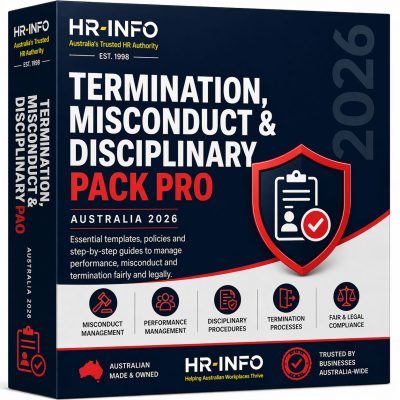 Termination, Misconduct & Disciplinary Pack PRO
Price range: $597.00 through $2,497.00
Termination, Misconduct & Disciplinary Pack PRO
Price range: $597.00 through $2,497.00
-
 Privacy, Data & Cyber Workplace Pack PRO
Price range: $497.00 through $1,997.00
Privacy, Data & Cyber Workplace Pack PRO
Price range: $497.00 through $1,997.00
Need Better Leadership Tools?
Explore the Manager Essentials Toolkit PRO Australia 2026 — practical leadership resources, communication tools and management frameworks for stronger workplace performance.HR-INFO.