
Many businesses focus heavily on sales, operations and finance while overlooking a quieter driver of business performance:
their internal people systems.
When HR systems are weak, outdated or inconsistent, the damage is rarely obvious at first.
There may be no major crisis. No dramatic headline problem. No immediate legal issue.
Instead, the cost appears slowly through lost time, management frustration, staff turnover, poor hiring decisions and operational drag.
For many employers, poor HR systems become an invisible tax on growth.
What Are HR Systems?
HR systems are not just software.
They include the practical frameworks used to manage people effectively, such as:
- workplace policies
- recruitment processes
- onboarding systems
- leave procedures
- performance management processes
- manager guidance tools
- documentation standards
- disciplinary procedures
- staff communication frameworks
Strong businesses usually build these intentionally.
Weak businesses often leave them to chance.
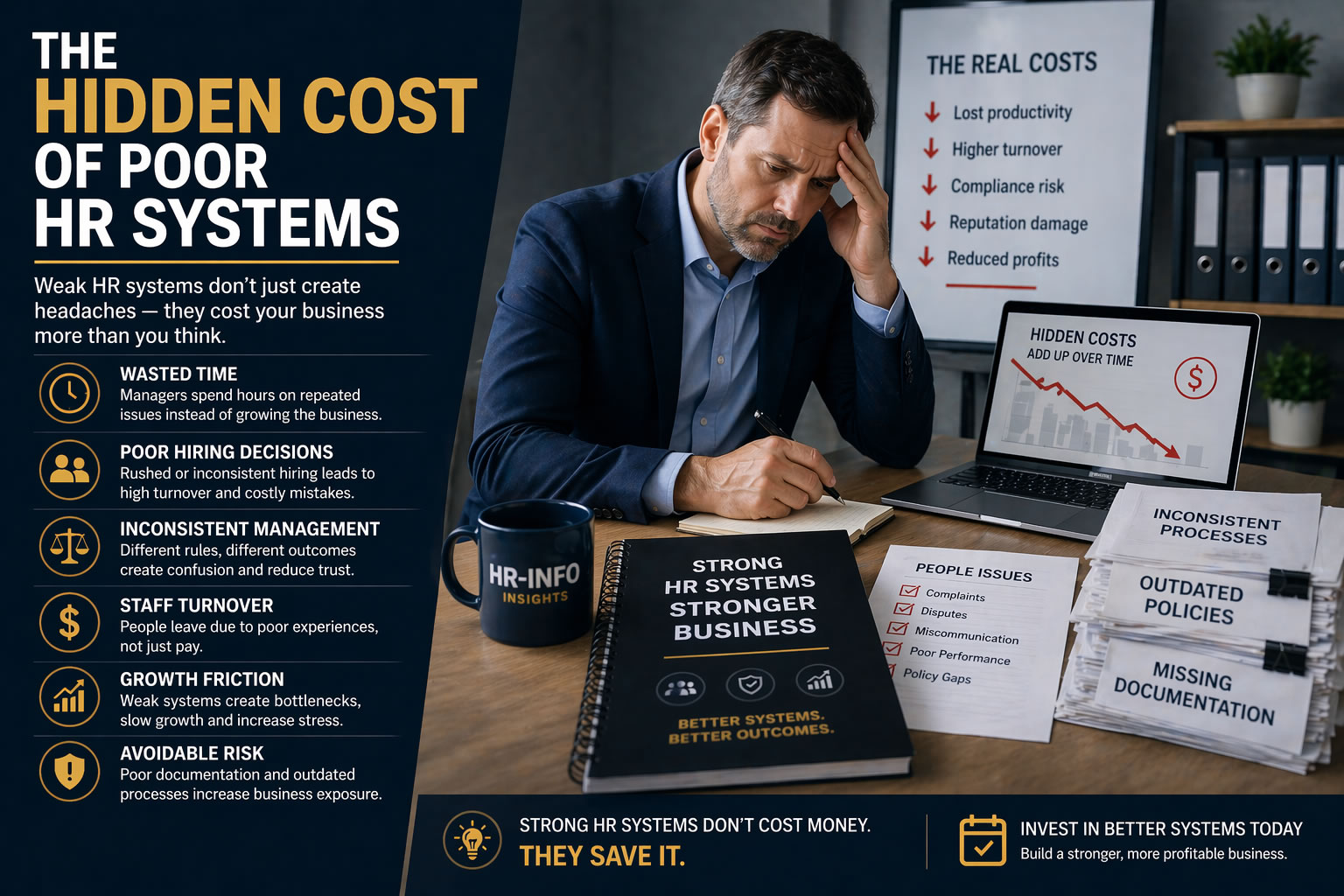
Cost #1: Wasted Management Time
When systems are unclear, managers repeatedly deal with preventable issues such as:
- answering the same questions
- resolving avoidable misunderstandings
- chasing missing documents
- handling inconsistent decisions
- fixing preventable people problems
This drains time away from leadership and growth.
Cost #2: Poor Hiring Decisions
Without structured recruitment systems, businesses often hire reactively.
That can lead to:
- rushed interviews
- unclear role expectations
- weak candidate assessment
- poor cultural fit
- expensive turnover
One poor hire can cost far more than a better recruitment process.
Cost #3: Inconsistent Management
If each manager handles staff matters differently, confusion grows quickly.
Examples include:
- leave approvals handled unevenly
- behaviour standards applied inconsistently
- performance issues ignored in some teams
- conflict managed poorly
Consistency matters because fairness and clarity matter.
Cost #4: Staff Turnover
Employees often leave not only because of pay, but because of poor internal experiences.
Weak systems can create:
- unclear expectations
- poor onboarding
- weak communication
- inconsistent leadership
- unresolved issues
Replacing staff is expensive and disruptive.
Cost #5: Growth Friction
What works with five staff often fails with twenty-five.
As businesses grow, informal systems usually become harder to sustain.
Without stronger foundations, growth may bring:
- bottlenecks
- owner dependency
- unclear responsibilities
- management strain
- rising internal friction
Good systems help businesses scale more smoothly.
Cost #6: Avoidable Risk
Poor documentation and outdated processes can increase exposure when staff matters arise.
Examples include:
- complaints
- disputes
- misconduct issues
- unclear expectations
- poor decision records
Better systems often reduce preventable risk.
Signs Your HR Systems Need Attention
If any of these sound familiar, review may be overdue:
- people issues keep repeating
- managers make inconsistent decisions
- hiring feels rushed
- owner handles too many staff matters personally
- documents are outdated
- onboarding is informal
- growth feels messy
What Smart Employers Are Doing in 2026
Forward-thinking businesses are:
- modernising workplace policies
- improving recruitment systems
- training managers
- standardising people processes
- improving documentation
- reducing founder dependency
- building scalable internal systems
They understand people systems are business systems.
The Good News
Improving HR systems does not always require complexity.
Often the biggest gains come from practical upgrades such as:
- clearer policies
- better templates
- structured hiring
- stronger manager tools
- documented processes
- ready-to-use frameworks
Small changes can create large operational benefits.
Final Thought
Poor HR systems rarely fail loudly.
They usually fail quietly through wasted time, turnover, inconsistency and stalled growth.
Businesses that strengthen people systems often operate with more confidence, better leadership and less friction.
That is why HR is not just administration.
It is infrastructure.
-
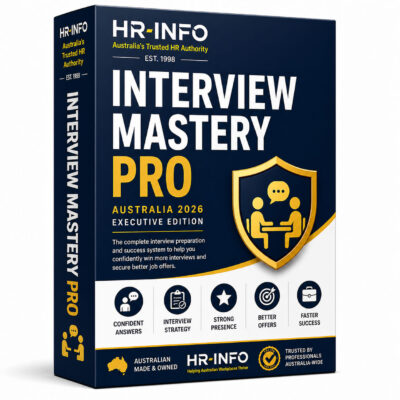 Interview Mastery PRO
Price range: $249.00 through $749.00
Interview Mastery PRO
Price range: $249.00 through $749.00
-
 Career Success Accelerator PRO
Price range: $249.00 through $695.00
Career Success Accelerator PRO
Price range: $249.00 through $695.00
-
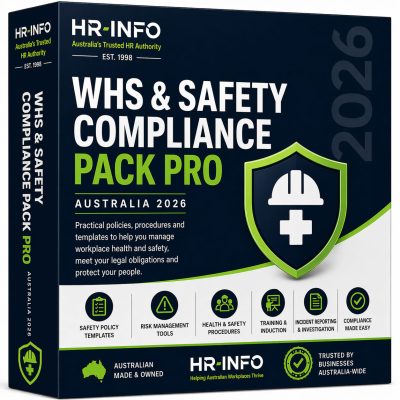 WHS & Safety Compliance Pack PRO
Price range: $497.00 through $2,197.00
WHS & Safety Compliance Pack PRO
Price range: $497.00 through $2,197.00
-
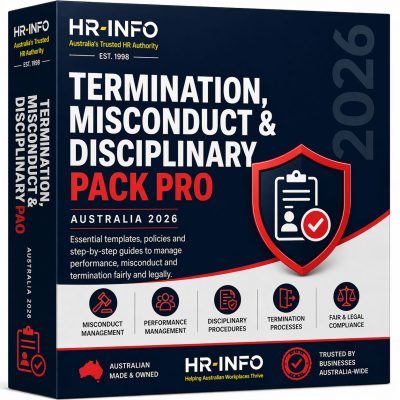 Termination, Misconduct & Disciplinary Pack PRO
Price range: $597.00 through $2,497.00
Termination, Misconduct & Disciplinary Pack PRO
Price range: $597.00 through $2,497.00
-
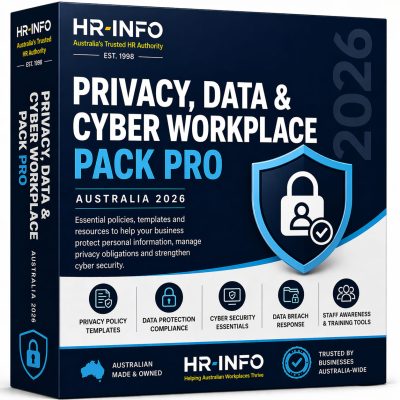 Privacy, Data & Cyber Workplace Pack PRO
Price range: $497.00 through $1,997.00
Privacy, Data & Cyber Workplace Pack PRO
Price range: $497.00 through $1,997.00
Ready to Strengthen Your HR Systems?
Explore the HR Complete Business System Australia 2026 — premium HR frameworks, compliance tools and business-ready people systems from HR-INFO.