
Many small businesses grow faster than their internal systems.
What begins as a close-knit team of a few employees can quickly become ten, twenty or more people — yet HR processes often remain informal.
That creates pressure.
Managers spend time solving repeated people issues, documentation becomes inconsistent, hiring feels rushed and staff expectations become unclear.
The good news is this:
Strong HR systems do not need to be complex.
For many small businesses, practical systems can be built faster than expected — and the payoff can be significant.
Why Small Businesses Need HR Systems Earlier Than They Think
Some owners assume HR systems are only necessary for large companies.
In reality, small businesses often benefit even more because resources are limited and mistakes can be costly.
Without structure, common problems include:
- inconsistent management decisions
- unclear expectations
- avoidable staff disputes
- poor recruitment outcomes
- wasted owner time
- reactive people management
- compliance gaps
Good systems reduce friction.
What an HR System Really Means
Many people hear “HR systems” and imagine expensive software or bureaucracy.
Often it simply means practical foundations such as:
- clear workplace policies
- consistent onboarding
- leave request processes
- recruitment templates
- performance conversations
- manager guidance
- disciplinary procedures
- staff records management
These basics can transform operations.
Start With Policies and Expectations
Every business benefits from clear written standards.
Examples include:
- workplace conduct
- leave procedures
- internet and email use
- safety expectations
- grievance handling
- attendance standards
- AI acceptable use where relevant
Policies help managers lead more consistently and staff understand expectations.
Improve Hiring With Simple Structure
Small businesses often hire reactively.
That can lead to rushed decisions and expensive turnover.
Instead, create a repeatable hiring process:
- define the role properly
- use a standard job ad template
- screen candidates consistently
- interview with set questions
- onboard professionally
Simple systems usually outperform improvisation.
Save Time Through Better Processes
Many owners underestimate how much time poor systems consume.
Repeated questions, confusion, missing documents and inconsistent decisions all create hidden costs.
Good HR systems save time by reducing chaos.
Train Managers Early
As businesses grow, frontline managers often become the biggest influence on culture and performance.
Yet many are promoted without management tools.
Provide guidance on:
- communication
- feedback
- handling issues
- documenting conversations
- setting expectations
Strong managers reduce business strain.
Signs Your Business Needs Better HR Systems Now
If any of these apply, action may be overdue:
- people issues keep repeating
- hiring feels rushed
- policies are unclear or missing
- managers handle matters differently
- owner spends too much time on staff issues
- growth is creating confusion
- documentation is inconsistent
What Smart Small Businesses Are Doing in 2026
Forward-thinking employers are:
- formalising basic HR foundations
- improving recruitment systems
- using better templates
- creating clearer policies
- supporting managers
- reducing owner dependency
- building systems before problems grow
They understand better structure supports better growth.
Fastest Way to Build Better HR Systems
You do not need to reinvent everything internally.
Many businesses accelerate progress by using professionally prepared templates, packs and ready-to-use frameworks.
This can save months of trial and error.
Final Thought
Small businesses often wait too long to strengthen people systems.
The earlier practical HR foundations are built, the easier growth usually becomes.
Good systems do not slow businesses down.
They help them scale with less stress.
-
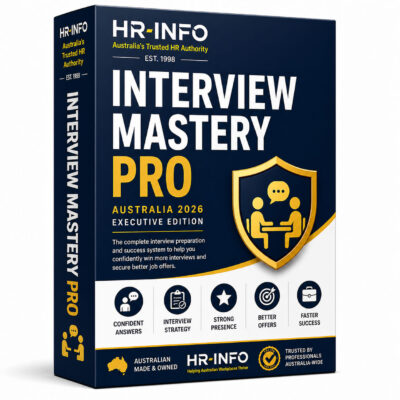 Interview Mastery PRO
Price range: $249.00 through $749.00
Interview Mastery PRO
Price range: $249.00 through $749.00
-
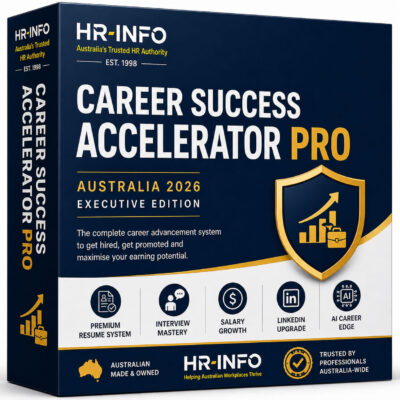 Career Success Accelerator PRO
Price range: $249.00 through $695.00
Career Success Accelerator PRO
Price range: $249.00 through $695.00
-
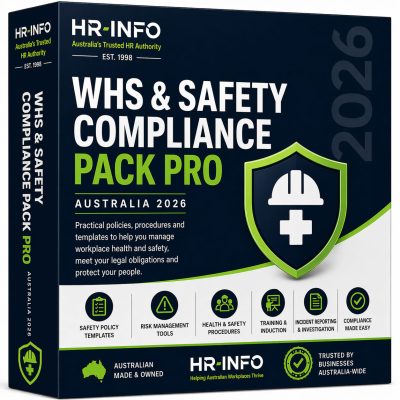 WHS & Safety Compliance Pack PRO
Price range: $497.00 through $2,197.00
WHS & Safety Compliance Pack PRO
Price range: $497.00 through $2,197.00
-
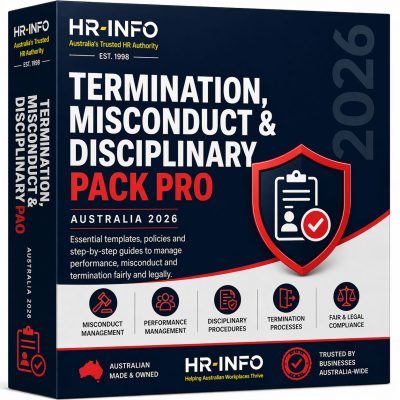 Termination, Misconduct & Disciplinary Pack PRO
Price range: $597.00 through $2,497.00
Termination, Misconduct & Disciplinary Pack PRO
Price range: $597.00 through $2,497.00
-
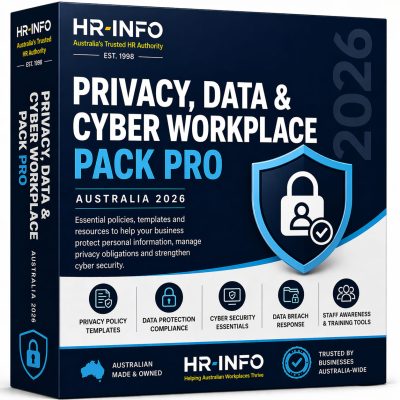 Privacy, Data & Cyber Workplace Pack PRO
Price range: $497.00 through $1,997.00
Privacy, Data & Cyber Workplace Pack PRO
Price range: $497.00 through $1,997.00
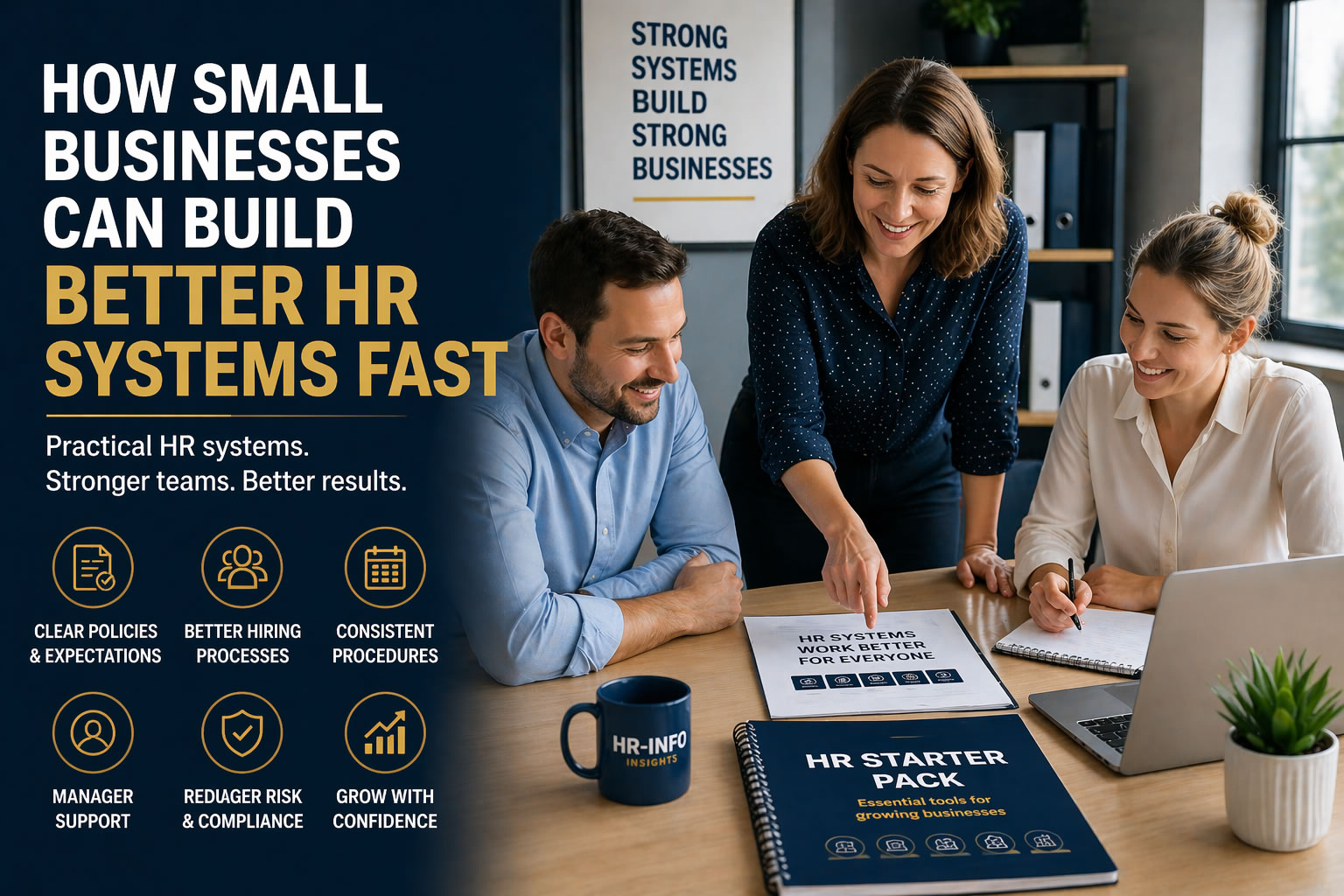
Ready to Build Better HR Foundations?
Explore the HR Starter Pack Australia 2026 — practical HR essentials designed for growing Australian businesses.yers.